

Commitee
Non Communicable Diseases :
Non-communicable diseases (NCD), also known as chronic diseases include cardiovascular diseases, diabetes, stroke, most forms of cancers and injuries. Such diseases mainly result from lifestyle related factors such as unhealthy diet, lack of physical activity and tobacco use. Changes in lifestyles, behavioural patterns, demographic profile (aging population), socio-cultural and technological advancements are leading to sharp increases in the prevalence of NCD. These diseases by and large can be prevented by making simple changes in the way people live their lives or simply by changing our lifestyle.
During the year 2005, NCD accounted for 53% of all the deaths in the age group 30-59 years in India. Of these, 29% were due to cardiovascular diseases; It is estimated that, by 2020, cardiovascular disease will be the largest cause of disability and death, as a proportion of all deaths in India. In 2003 alone, in India, there were approximately 30 million people suffering from coronary heart disease. It is estimated that the overall prevalence of diabetes, hypertension, Ischemic Heart Diseases (IHD) and Stroke is 62.47, 159.46, 37.00 and 1.54 respectively per 1000 population of India. There are an estimated 25 Lakh cancer cases in India.
Non Communicable Diseases Committee :
IAPSM is committed towards development of its subspecialties Non-communicable diseases as well. With the same objective IAPSM has constituted committee in Non-communicable diseases.
This committee is dedicated teams working for special subspecialties within overall goal and objectives of IAPSM. Committee is responsible for
- Facilitates National level Academic activities like National seminar, workshops, training programs etc. for Non-communicable diseases.
- Carry out research, monitoring and evaluation of health programs/services for the Non-communicable diseases.
- Develop the course, fellowship programs for Non-communicable diseases.
- Develop technical documents e.g. guidelines, training modules, educational literature etc. for Non-communicable diseases
- Plan action project on capacity buildings, community intervention etc. on Non-communicable diseases
- Any other activities for Non-communicable diseases, which are within in line of goal and objectives of IAPSM.

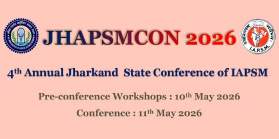
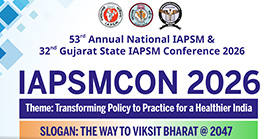
 Upcoming events

News & Updates
List of eligible candidates for Election for various posts of IAPSM 2026-27
IAPSM TB Day PG Quiz 2026
IAPSM Election 2026 Announcement Final
FHTS IAPSM Public Health Innovation Award
FHTS IAPSM Public Health Innovation Award-Submission Template Faculty Researcher
FHTS IAPSM Innovation Award Submission Template for PG Students
Join IAPSM - Easy Steps
Announcement Regarding IAPSM Election 2026-27
Announcement Star Performer Award 25-26
Expression of Interest to Host 7th IAPSM Young Leaders National Conclave
Expression of Interest to Host IAPSMCON 2028
IAPSM Lifetime Achievement Award
IAPSM Upcoming Young Talent Award
Presidential Appreciation Awards Announcements 2026